1889
Pink and blue halves
In 1889 the club, then Singers FC, wore pink and blue halved shirts in the corporate colours of Singers. In the 1890s the colours were black and red.
Last updated:
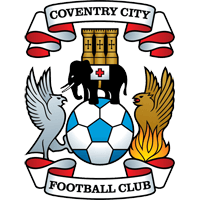
As their Sky Blues name suggests, Coventry play in sky blue, but only after pink and blue, black and red, and red and green, until Jimmy Hill's "sky blue revolution" made it stick in 1962. The crest draws on the city's coat of arms: an elephant carrying a castle, flanked by an eagle and a phoenix.
Past crest images are not shown because they belong to their rights holders.
At the centre, standing on a football, is the elephant carrying a castle from the city's coat of arms, a beast strong enough to carry a tower. Either side are the eagle and the phoenix, supporters added to the city arms in 1959: the eagle for ancient Coventry and the phoenix rising from the flames for the new Coventry reborn from the ashes of the old.
Source: Coventry City Council
Kit illustrations are FootRadars drawings based on the colours and patterns described in the sources, not the actual designs.
In 1889 the club, then Singers FC, wore pink and blue halved shirts in the corporate colours of Singers. In the 1890s the colours were black and red.
Sky blue was first used in 1898 and kept until 1922. In the early 1920s the club wore red and green to reflect the city crest, and variations of blue and white followed until the 1960s.
Manager Jimmy Hill brought sky blue back in 1962, starting the "sky blue revolution". Home shirts have been completely or predominantly sky blue since.
The chocolate brown away kit of 1978 has been called the worst in English football history, yet it has iconic status with some fans. The club wore a special brown shirt in the last home game of 2008–09 to mark its 125th year.
In 2019 the club launched a black and white third kit honouring the city's connection with 2 Tone Records on the label's 40th anniversary.
Drawn from this season's kit colours in the club's English Wikipedia infobox. Patterns and details are only partly reflected.
Source: Wikipedia
| 1974–1975 | Umbro |
| 1975–1981 | Admiral Sportswear |
| 1981–1983 | Big T |
| 1983–1986 | Umbro |
| 1986–1987 | Triple S Sport |
| 1987–1989 | Hummel |
| 1989–1992 | Asics |
| 1992–1994 | Ribero |
| 1994–1996 | Pony |
| 1996–1999 | Le Coq Sportif |
| 1999–2004 | CCFC Leisure (in-house) |
| 2004–2006 | Kit@ |
| 2006–2015 | Puma |
| 2015–2019 | Nike |
| 2019– | Hummel |
| 1980–1983 | Talbot |
| 1983–1984 | Tallon |
| 1984–1985 | Glazepta |
| 1985–1986 | Elliotts |
| 1986–1988 | Granada Bingo |
| 1989–1997 | Peugeot |
| 1997–2005 | Subaru / Isuzu |
| 2005–2010 | Cassidy Group |
| 2010–2013 | City Link |
| 2013–2014 | Grace Medical Fund |
| 2014–2018 | Allsopp & Allsopp |
| 2018–2019 | Midrepro |
| 2019–2020 | Allsopp & Allsopp |
| 2020–2023 | BoyleSports |
| 2023–2024 | King of Shaves |
| 2024– | Monzo |
This page was written with AI assistance from the sources listed below.